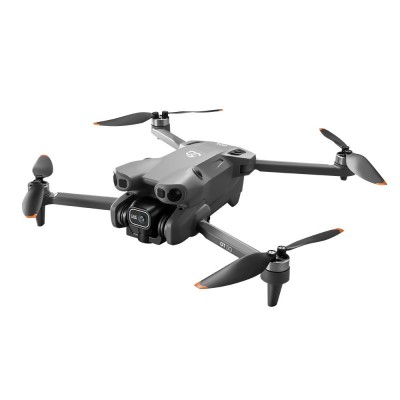
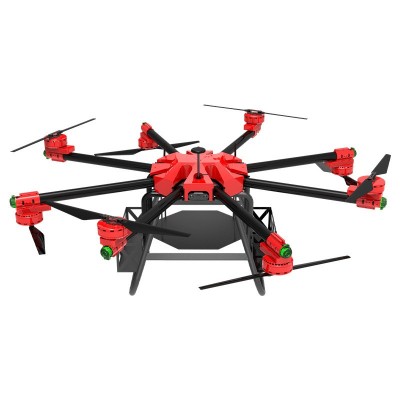
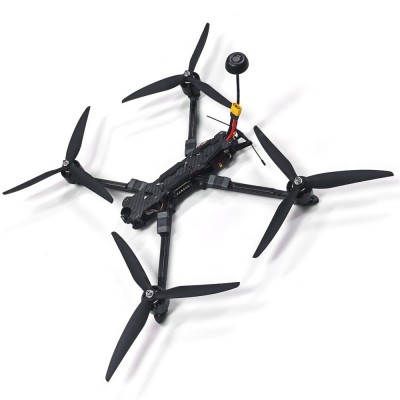
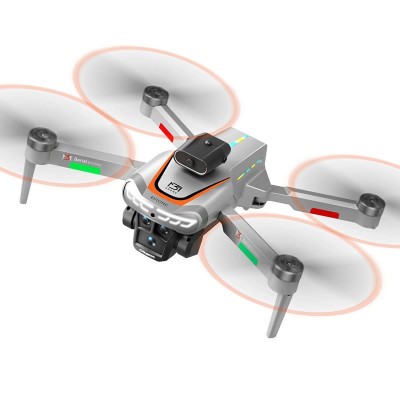
Preparations before startup
1.Choose a site with good flight conditions:open and unobstructed,without power lines;there should be no interference from mobile phone base stations,WIFI,high-voltage power lines,electronic fences,etc.Observe the selected location on the computer satellite map in advance,and note down the approximate height and direction of the surrounding buildings to have a clear understanding and ensure that the antenna can aim at the aircraft in real time without any obstruction.At the same time,you can also determine the points of interest in advance,so that after the aircraft takes off,it can head straight for the points of interest,increasing efficiency
2.When flying the elf,try to do it when the wind force is at or below level 4,and make sure of the wind direction and weather conditions
3.Before starting the camera,remove the lens cap and gimbal lock,prepare your phone in advance,and if possible,wear a strap
4.Confirm that automatic homing is enabled,and the homing altitude is 20 meters higher than all surrounding buildings
5.Before starting the machine,confirm that:①the throttle is centered;②the joystick is in P mode(taking P3S as an example:move the S1 joystick to the top)
6.The memory card is inserted and not full
7.Check if all items are complete:aircraft,remote control,battery,mobile phone/tablet,propeller,and a pair of replacement propellers(the following are optional:sling,sun visor)
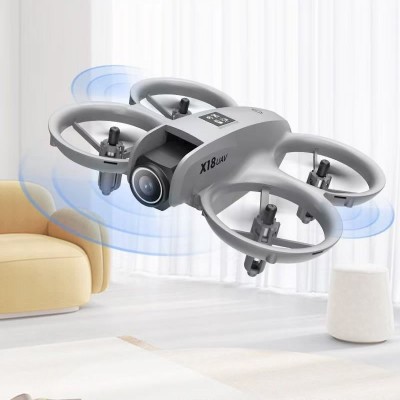
Preparations before takeoff
1.GPS is in good condition(otherwise,P mode cannot be achieved)
2.Check if the compass is interfered with and if it has been calibrated.The presence of transformers,large metal objects,and other items in the vicinity can affect the stability of the compass.
3.Tighten the propeller(but not too tightly)and confirm whether it is securely fastened.As it is a self-tightening propeller,the motor's rotation will continue to tighten the propeller.
4.Check if the battery,remote control,and phone are fully charged
5.Check whether there are signs of cracking on the fuselage motor mount and landing gear
6.Check if there are any obvious impurities inside the motor.If present,they should be removed promptly
7.Check whether there is any obvious damage on the surface of the propeller,and whether there is any thread slipping on the surface of the screw
8.Is the gimbal centered,and is the gimbal stabilization system functioning properly
9.Before night flight,the front arm lights must be turned on.If possible,bring a flashlight to illuminate the ground during landing,so as to facilitate the aircraft to confirm the landing location
10.Power-on sequence:Turn on the remote controller first,then turn on the aircraft
Precautions for launch
1.After takeoff,hover the aircraft at 5 meters for a while,and then perform actions such as ascending,descending,moving forward and backward,left and right,and rotating left and right,to observe whether the attitude is stable;2.Keep the remote control antenna parallel to the aircraft's landing gear,and ensure there is no obstruction between the antenna and the aircraft;3.If possible,try to avoid flying the aircraft directly above crowds.
Precautions for landing
1.If the venue allows,follow a zigzag descent route(DJI has limited the descent speed of the Phantom 3,so it's okay to not follow a zigzag route).2.Evacuate onlookers before landing(the best way is to fly alone in a remote location).
Handling or avoidance of accidents
1.Loss of image transmission signal:If the image transmission signal is lost,immediately stop all operations and calmly think,because the aircraft will automatically hover at this time,which will not cause an accident.The root cause of an accident is incorrect operation.You can take any of the following actions:①Immediately enable automatic return;②Search for the aircraft's trail in the air and visually fly back;③If the aircraft's trail cannot be visually found,recall the last heading of the aircraft and fly back according to your impression;④Enable the"return point lock"mode in intelligent flight and directly pull the lever backward to fly back.
2.Out of Control:Since the drone can automatically return to its home base after losing control,the safest approach is to wait at the original location.However,if there are companions nearby and the return altitude is not safe enough(there is a risk of colliding with surrounding obstacles),one person can stay behind to wait,while the other person takes the controller to the location where the drone has lost control.
3.Collision with obstacles due to improper control:Anti-collision rings can be installed on the aircraft.
4.Avoid propeller damage:
①Before flight,inspect the propeller and motor screws for any signs of slipping,and check the propeller surface for any damage or cracks;
②Before takeoff,tighten the propeller moderately(too much force may cause slipping).